7 EV Car Heater Buying Tips for Global Buyers

Time:2026-09-25 Author:Henry
0%

As electric vehicle ownership expands, cabin heating is becoming a practical buying concern, not a minor comfort feature. The International Energy Agency reported that global electric car sales exceeded 17 million in 2024. More vehicles also mean more drivers comparing winter range, charging time, and thermal comfort. An Ev Car Heater can influence all three.

Cold weather exposes weak designs quickly. The U.S. Department of Energy explains that low temperatures reduce battery performance and increase energy demand for cabin heating. AAA testing also found that freezing conditions could reduce electric vehicle range by more than 40% in some cases. The result is easy to imagine: a frosted windshield, a cold seat, and a battery percentage falling faster than expected. Heat pumps usually use less energy than basic resistance heaters, but they may cost more and perform differently below extremely low temperatures.

Dr. Jeffrey L. Wishart, an electric-vehicle thermal-management researcher, has emphasized that “cabin heating can significantly affect electric-vehicle energy consumption.” That warning deserves attention. However, product claims are not always comparable. Testing methods differ. Marketing numbers can look cleaner than real winter driving.

This guide presents seven buying tips for global buyers. It examines heater type, voltage compatibility, efficiency, noise, safety controls, installation, and local climate. Look beyond wattage. Ask how the system performs after repeated cold starts. A perfect heater does not exist. The right choice depends on climate, driving habits, vehicle architecture, and honest expectations.
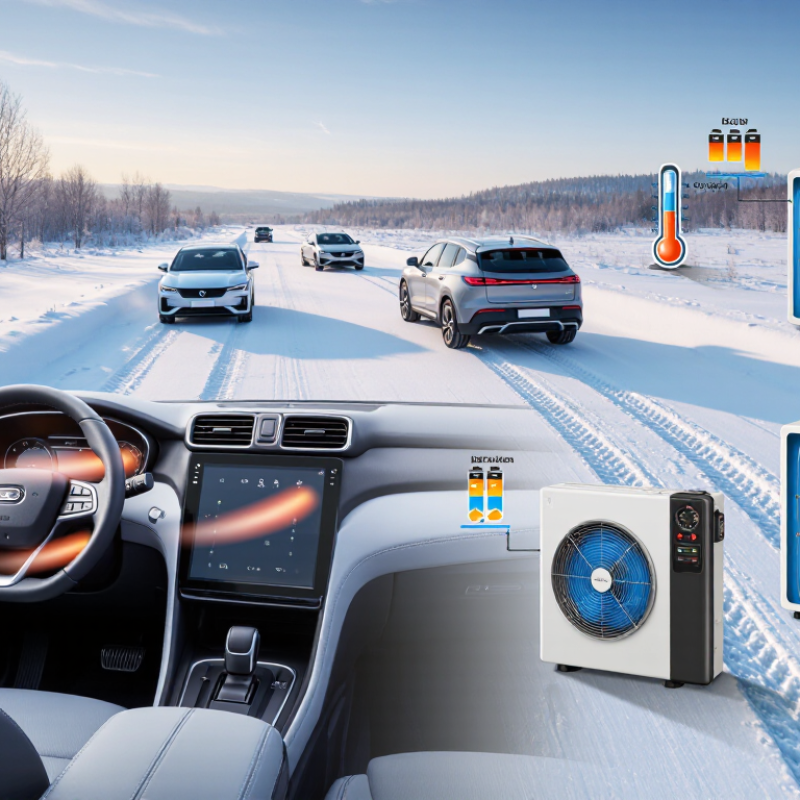
7 EV Car Heater Buying Tips for Global Buyers

Assess Climate and Range Loss: Cold Can Cut EV Range by Up to 41% (AAA)

Cold-weather range loss should shape an EV heater purchase, not sit in the fine print. AAA’s 2019 testing found that driving range fell by an average of 41% at 20°F compared with 75°F, with the cabin heater operating. The test involved five electric vehicles, so treat the result as a warning, not a universal prediction. Your route, speed, battery condition, and parking temperature all matter.

A heater can make winter trips comfortable, but it draws energy that could otherwise move the car. A resistive heater warms the cabin directly; a heat-pump system can use energy more efficiently in suitable conditions, though performance varies with temperature and design. Ask suppliers for heating capacity, power draw, cold-start performance, and tested operating temperatures. A brochure figure alone is not enough. AAA’s result reflects a specific test, and real journeys can differ.

Tips: Match heater output to your coldest regular conditions, not an occasional mild winter day. Check whether the stated range includes cabin heating. Compare estimated energy use during a cold start, when the cabin is still chilly. Leave a margin for detours and charging gaps. Small details matter. A little guesswork may remain.

Choose Heat-Pump or PTC Technology: DOE Reports 2–4× Efficiency Potential

Choosing cabin heat is an energy decision, not just a comfort preference.
PTC heaters convert electricity directly into heat, so nearly every kilowatt-hour drawn becomes cabin warmth. Heat pumps move heat from outside air or the vehicle’s powertrain instead. That can reduce battery drain in suitable conditions. On a frosty morning, the difference may show up as extra driving range.
Small detail, big impact.

The U.S. Department of Energy’s Energy Saver guidance says heat pumps can deliver about two to three times more heat than electric-resistance systems using the same electricity. The often-quoted 2–4× potential is best treated as a favorable-condition range, not a winter guarantee. Efficiency falls in very cold weather, and defrost cycles consume energy.
Not a guarantee.

AAA’s 2019 electric-vehicle range tests found an average 41% range reduction at 20°F with cabin heat operating, compared with testing at 75°F. The result highlights how strongly heating demand can affect a trip, though each vehicle and route differs. Global buyers should ask for cold-weather range tests, heat-pump operating limits, and cabin warm-up times.
Check defrost performance, too. A heat pump may save energy, but PTC backup can still matter when temperatures plunge.

Match Voltage and Output: Compare 400/800 V Systems and 3–7 kW Demand

Treat 400 V and 800 V as system classes, not exact heater input voltages. Battery voltage shifts with state of charge, so verify the heater’s operating range, insulation rating, connector, and control interface. At 3–7 kW, ideal current is about 7.5–17.5 A on 400 V, or 3.75–8.75 A on 800 V. Real current varies with conversion losses and bus voltage. Check the full window.

Choose output by cabin volume, insulation, glazing, climate, and warm-up target—not platform voltage alone. AAA’s 2019 cold-weather EV test found range fell about 41% at 20°F with cabin heat set to 72°F. That result reflects one test condition, not every vehicle or journey. Real-world loads vary. A small car in mild weather may need less sustained heat than a large van with frequent door openings. Request both start-up and steady-state power figures, plus thermal output and low-voltage derating data. Leave some margin, but do not oversize blindly; assumptions need validation in vehicle testing.

Verify Safety and Compatibility: UNECE R100, ISO 6469, IP67, CAN, and EMC

For an EV heater, a safety mark is only the start of verification. UNECE R100 addresses electric powertrain and rechargeable energy storage safety; ISO 6469-3 covers electrical safety in electrically propelled road vehicles. Ask suppliers for current test reports, approval scope, and installation conditions—not just a certificate image.

The IEA’s Global EV Outlook 2024 reports nearly 14 million electric cars sold in 2023, around 18% of global car sales. That scale makes clear documentation and repeatable checks essential.

Check the vehicle’s voltage, connector, fuse rating, and control signals against the heater specification. Small mismatches matter.

Treat IP67 as a defined test rating, not a promise of permanent waterproofing. Under IEC 60529, it indicates dust-tight protection and resistance to temporary immersion under specified conditions.

Inspect seals, cable entries, and mounting points, especially where road spray can collect.

Then confirm CAN message definitions and fault responses with the vehicle team. A heater that powers on may still disrupt diagnostics.

Request EMC test evidence to relevant vehicle requirements, such as CISPR 25 or ISO 11452, and confirm the tested wiring layout matches installation.

Reports are useful; real harnesses can differ. That part deserves another look.

Compare Total Value: Efficiency, Noise, Warranty, Cost, and Service Life

7 EV Car Heater Buying Tips for Global Buyers
Compare Total Value: Efficiency, Noise, Warranty, Cost, and Service Life

A heater’s purchase price tells only part of the story. Compare its energy use under similar conditions, such as a cold morning and a set cabin temperature. High power draw may reduce driving range, while a slower warm-up may feel uncomfortable during short trips. Ask for test conditions, not just a best-case efficiency figure. Small details matter.

Tips: Check noise at low and full fan speed. Listen for rattling, sharp airflow, or vibration inside a quiet parked vehicle. Review warranty coverage for the heater core, controls, and labor; exclusions can change the real value. Also ask whether replacement parts and qualified service are available where the vehicle will operate.

Estimate total cost over several winters, including installation, maintenance, and possible repairs. A lower-priced unit may cost more if it wears quickly or needs specialist servicing. Confirm expected service life and how it was tested. Real use varies with climate, driving habits, and installation quality, so treat any lifespan estimate as a guide, not a promise. I would compare written specifications carefully; sales claims can leave important gaps.

EV Cabin Heater Buying Guide: Compare Total Value

Electrical input needed to deliver 5 kW of cabin heat

How to use this comparison: A resistive PTC heater is shown at an idealized 1:1 heat-to-electricity ratio; the heat-pump example assumes a COP of 2.5. Actual consumption varies with outdoor temperature, system design, and operating conditions. For total value, also compare noise under similar conditions, warranty coverage, purchase and installation cost, and expected service life—these depend on the specific vehicle and supplier.

FAQS

How much can cold weather reduce an electric vehicle’s driving range?

A cold-weather test found an average range loss of about 41% at 20°F. The cabin heater was operating during testing. Real results vary with speed, battery condition, route, and parking temperature. Treat this figure as a warning, not a promise.

Why does a cabin heater reduce driving range?

Heating uses energy that could otherwise move the vehicle. Resistive heaters create heat directly and may draw substantial power. Heat-pump systems can use energy more efficiently in suitable conditions. Performance still changes with temperature and system design.

What heater information should buyers request?

Ask for heating capacity, power draw, and cold-start performance. Request tested operating temperatures and steady-state energy use. Check whether published range figures include cabin heating. A brochure alone is not enough.

How should heater output match the vehicle?

Match output to the coldest regular conditions, not occasional mild weather. Consider cabin volume, insulation, windows, and the desired warm-up time. A small car may need less sustained heat than a large van. Frequent door openings can increase heating demand.

Are 400-volt and 800-volt heaters interchangeable?

Not automatically. These figures describe system classes, not exact heater input voltages. Battery voltage changes with charge level. Verify the operating range, insulation rating, connector, and control interface.

How much current might a 3–7 kW heater use?

At 400 volts, ideal current is about 7.5–17.5 amps. At 800 volts, it is about 3.75–8.75 amps. Conversion losses and changing bus voltage affect real current. Check the complete operating window.

What should buyers check beyond purchase price?

Compare efficiency, noise, warranty coverage, service access, and expected life. Listen for rattling, vibration, or sharp airflow inside a quiet parked vehicle. Review coverage for the heater core, controls, labor, and exclusions. A cheaper unit may cost more later.

How can buyers estimate the heater’s total cost?

Include installation, maintenance, replacement parts, and possible repairs. Compare performance during a cold morning, not only ideal conditions. Ask how service life was tested. Estimates remain imperfect. Real use can be messier.

Conclusion

Choosing an Ev Car Heater starts with understanding the climate and its effect on driving range. Cold weather can reduce EV range by up to 41%, so heating efficiency matters, especially for frequent winter travel. Compare heat-pump systems, which can offer substantial efficiency advantages, with PTC heaters, which may suit different climates and vehicle designs. Also check that the heater’s voltage and output match the vehicle: 400- and 800-volt systems have different requirements, while typical heating demand may range from 3 to 7 kW.

Before buying, confirm safety and compatibility, including relevant vehicle standards, an IP67 protection rating where required, CAN integration, and electromagnetic compatibility. Finally, assess overall value rather than focusing only on the purchase price. Efficiency, operating noise, warranty coverage, service life, and access to maintenance all contribute to the heater’s long-term suitability.


Henry

Henry

Henry is a dedicated marketing professional with a profound expertise in the company's offerings. With years of experience in the industry, he possesses an impressive understanding of the market dynamics and consumer behaviors that drive success. Henry is committed to sharing his insights through......