A Mini Water Pump is a compact device that moves water through a controlled path. You may find one inside an aquarium, cooling system, fountain, coffee machine, or portable cleaner. Despite its small size, it can create steady flow for many practical tasks. Its performance depends on the motor, impeller or diaphragm, water pressure, tubing size, and power supply.
The working process is straightforward. Electricity drives a small motor inside the pump. In a centrifugal design, the motor spins an impeller, which pushes water outward and toward the outlet. Diaphragm models use repeated membrane movement instead. This action draws water through the inlet and sends it forward under pressure. The difference matters when choosing a pump for clean water, narrow tubing, or intermittent operation.
Small details often decide whether the system works well. A blocked filter can reduce flow. Air trapped in the inlet may stop normal priming. Excessive voltage can damage the motor, while undersized tubing increases resistance. These points are easy to overlook. That description is useful, but incomplete. Real performance also changes with water temperature, lifting height, installation angle, and continuous running time. Reliable selection should therefore begin with the required flow rate and head height, not the pump’s attractive size. This guide explains the internal parts, operating principle, common pump types, and practical selection factors. It also highlights safe installation habits and limitations, so readers can judge whether a Mini Water Pump truly fits their application.
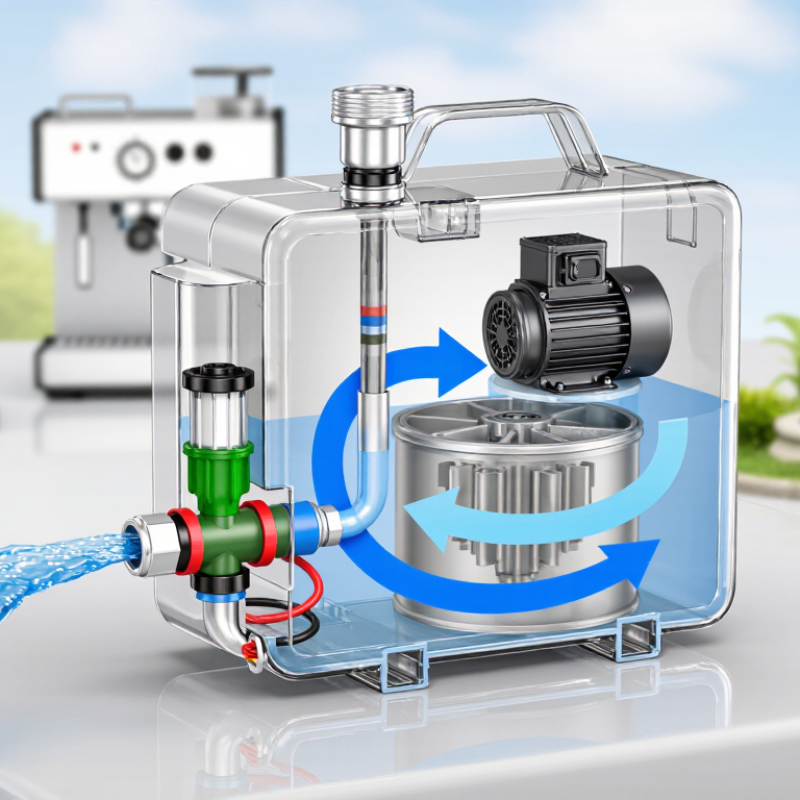
A mini water pump is a compact device that moves water through narrow tubing, small tanks, or cooling circuits. It uses an electric motor to rotate an impeller, create pressure, and push water toward an outlet. Some models use a diaphragm that pulses instead of spinning. The working sound may be a soft hum, but vibration can increase on a hard surface.
Voltage usually ranges from 3 to 24 V DC. Small 3 V or 5 V pumps suit portable projects and sensor equipment. A 12 V pump is common in compact circulation systems. Higher-voltage units often provide stronger pressure, but they may draw more current. Typical flow rates run from 0.1 to 20 L/min. However, this number often describes open-flow performance, without tubing resistance or height.
Centrifugal pumps work well for steady circulation and clean water. Diaphragm pumps can produce higher pressure and handle intermittent operation. Peristaltic pumps isolate the liquid inside flexible tubing, which helps when contamination matters. Check the maximum lift, inlet size, current draw, and permitted liquid temperature before installation. Keep the inlet submerged and avoid dry running. Actual flow may fall sharply through a long, thin tube. I have also found that advertised ratings can feel optimistic in practice, especially with weak power supplies. A small filter can protect the impeller, though it may reduce flow.
Mini water pumps are compact devices that use an electric motor to drive an impeller or diaphragm, moving water through an inlet and outlet. Typical models operate from 3–24 V DC, with flow rates commonly ranging from about 0.1 to 20 L/min. Actual performance depends on pump design, pressure, tubing, and lift height.
The values shown are representative maximum-flow specifications for small DC water pumps at low or zero discharge pressure. Increasing pressure or lifting water vertically normally reduces the delivered flow rate.
A mini water pump moves liquid by converting electrical energy into hydraulic flow. Its motor spins the impeller, usually at several thousand revolutions per minute. The impeller’s curved blades push water outward through centrifugal force. The housing surrounds this action and turns velocity into usable pressure. A compact pump may deliver only a few liters per minute, yet small restrictions can reduce flow sharply. The U.S. Department of Energy reports that pumping systems can consume 25–50% of electricity in some industrial facilities, making efficient component selection important.
The inlet guides water into the impeller eye. The outlet directs pressurized water toward tubing or a spray head. Poor inlet alignment can create air pockets, noise, and unstable flow. The control circuit manages starting, speed, overload protection, or dry-run shutdown. Some circuits use pulse-width modulation for finer speed control. However, a lower speed does not always mean lower energy use. Actual performance depends on head pressure, tubing length, liquid temperature, and blockage. Hydraulic Institute guidance also stresses matching pump duty to the system curve, not relying only on advertised maximum flow.
Tips: Measure the inlet and outlet diameter before installation. Keep the inlet submerged and the filter clean. Test flow under real operating height. A pump rated at zero head may perform poorly in service. This is an easy detail to miss. For safety, use the electrical rating specified by the manufacturer and inspect wiring for moisture damage.
(Sources: U.S. Department of Energy, Improving Pumping System Performance; Hydraulic Institute, ANSI/HI pump application guidance.)
What Is a Mini Water Pump and How Does It Work?
A mini water pump converts motor power into pressure and flow. Its head rating shows how high it can lift water, not the exact outlet pressure. For clean water, 1 meter of head equals about 9.81 kilopascals. Therefore, a 0.5–10 m head range represents roughly 4.9–98.1 kPa before losses. The U.S. Department of Energy’s Improving Pumping System Performance sourcebook notes that pumping systems may consume about 20–25% of industrial electricity. Even a small pump deserves careful sizing.
Inside a centrifugal model, a rotating impeller accelerates water outward. The housing then changes velocity into pressure. As head rises, available flow usually falls. A pump rated at 10 m may deliver little water at that height. Check the performance curve, not only the maximum number. Hydraulic power follows P = ρgQH, while real efficiency remains below 100%. Short tubing, fewer bends, and a clean inlet can noticeably improve delivery.
A quick test helps.
Measure flow into a container for one minute. Then repeat it with the actual hose length and vertical lift. Small pumps often struggle with narrow tubing, air leaks, or warm water. In practice, calculated results can look too optimistic. That is a useful warning, not a failure. The Hydraulic Institute recommends evaluating pumps through their complete operating system, because friction and control conditions change the working point.
A mini water pump uses an impeller or diaphragm to move water through a narrow passage. Its 1–50 W rating describes electrical input, not guaranteed water output. A 5 W pump may lift water efficiently at low pressure, while a 40 W model handles greater head or resistance. Check the pump curve, not wattage alone. The U.S. Department of Energy’s pumping-system guidance identifies flow, pressure, and operating conditions as key energy factors.
Efficiency changes with the working point. A pump near its best-efficiency region usually delivers more water per watt. Small pumps can lose performance through heat, friction, and restrictive tubing. ISO 9906 testing principles also show why measured flow and head should be compared under defined conditions. Numbers without test conditions can mislead.
Fluid viscosity matters. Water flows easily, but thicker liquids demand more torque and may reduce flow. In a practical check, measure discharged volume with a container and stopwatch. Record voltage, current, tubing size, and lifting height. Keep the inlet submerged. Air bubbles create noisy, uneven delivery.
Very low power is not always economical. A 1 W pump may consume less energy, yet run longer and fail to meet the required pressure. That trade-off deserves a second look. Performance data from the Hydraulic Institute also emphasizes matching pump selection to system resistance, rather than choosing power by appearance.
What Is a Mini Water Pump and How Does It Work?
A mini water pump uses an electric motor to move water through an inlet and outlet. Many compact models use centrifugal impellers, which spin water outward and create flow. A 12 V pump suits portable systems, battery projects, and vehicle-based equipment. It usually needs less wiring than a mains-powered pump. Still, voltage alone does not determine performance. Flow rate, maximum head height, current draw, and duty cycle matter more.
For cooling, choose a pump rated for continuous operation and match its flow to the heat exchanger. A restrictive tube can reduce real performance sharply. Add a filter before the inlet. Small debris can damage the impeller. In irrigation, pressure and clog resistance deserve attention. A pump that moves water quickly may not push it through narrow emitters effectively. Measure the pipe length and height difference before purchasing. Guessing often causes weak coverage.
Aquarium pumps need quiet operation, stable flow, and water-safe materials. Avoid running any pump dry. It can overheat within minutes. For 12 V systems, check the starting current, fuse rating, connector protection, and cable length. Longer cables may cause voltage drop. Bench testing with a bucket can reveal leaks and unexpected noise. I once underestimated outlet restriction; the pump sounded healthy but delivered little water. That mistake is worth remembering. A transparent hose and simple flow measurement provide better evidence than the label alone.
| Dimension | Typical Data or Operating Principle | Selection Criteria | Common Applications | Important Considerations |
|---|---|---|---|---|
| Definition | A mini water pump is a compact device that transfers water or other compatible liquids by converting motor energy into fluid movement. Common designs include centrifugal, diaphragm, peristaltic, and submersible pumps. | Choose the pump according to required flow rate, pressure or head, liquid temperature, fluid cleanliness, operating time, and available power. | Small cooling loops, laboratory equipment, desktop fountains, aquarium systems, plant irrigation, portable appliances, and battery-powered projects. | “Mini” describes physical size and capacity, not one universal performance standard. Always compare the pump curve and operating limits. |
| How a centrifugal mini pump works | An electric motor rotates an impeller. The impeller increases the liquid’s velocity, and the pump housing converts part of that velocity into pressure, causing water to move through the outlet. | Use the pump curve to find the flow available at the required total dynamic head. Flow normally decreases as system resistance and elevation increase. | Water circulation, electronics cooling, aquariums, fountains, and low-pressure transfer. | Many small centrifugal pumps should not run dry because water may be needed to lubricate or cool internal components. |
| How a diaphragm pump works | A flexible diaphragm moves back and forth. Check valves alternately draw liquid into the chamber and push it toward the outlet, producing positive-displacement flow. | Select it when higher pressure, self-priming, or controlled dosing is more important than smooth, continuous flow. | Spraying, metering, pressurized irrigation, portable water systems, and fluid transfer. | Diaphragm pumps can generate pressure even at low flow, so a pressure switch, bypass, or relief device may be needed. |
| Typical compact pump capacity | Representative small-pump ranges are approximately 0.5–15 L/min and 0.5–5 m of maximum head, depending on pump design and motor size. | Do not select by maximum flow alone. Match the required flow at the actual head, tubing length, fittings, filter resistance, and elevation. | Small circulation and transfer tasks where a modest flow rate is acceptable. | Maximum flow and maximum head usually cannot be achieved at the same time. They are opposite endpoints of the pump performance curve. |
| Cooling systems | Liquid cooling removes heat from a component and transfers it to a radiator, heat exchanger, or cooled reservoir. Required flow depends on heat load and allowable temperature rise. | For water, a useful estimate is: Flow (L/min) ≈ 14.3 × Heat Load (kW) ÷ Temperature Rise (°C). Select additional head capacity for tubing, blocks, radiators, and fittings. |
Computer cooling loops, LED lighting, laser equipment, battery modules, small machinery, and process prototypes. | Use compatible coolant materials, prevent air ingestion, and verify continuous-duty operation. A higher flow rate does not always produce better cooling if the heat exchanger is the limiting component. |
| Plant irrigation | Irrigation pumps deliver water through tubing, emitters, or spray nozzles. The required pressure is determined by elevation, tubing friction, filters, valves, and emitter operating pressure. | Calculate total dynamic head and ensure the pump provides the required flow at that head. For drip systems, confirm that the pump does not exceed the tubing or emitter pressure rating. | Indoor plants, hydroponic reservoirs, seedling trays, rooftop gardens, and small greenhouse systems. | Use a timer or controller for scheduled operation. A filter is recommended when the water contains particles that may block emitters. |
| Aquarium systems | A circulation pump moves water through the tank, filter, protein skimmer, chiller, or other equipment. The displayed pump rating is commonly measured with little or no restriction. | For general circulation, a broad starting point is about 4–10 tank turnovers per hour, then adjust for livestock, filtration, aquascaping, and desired current. | Freshwater aquariums, marine aquariums, nano tanks, filter systems, and small water features. | Use aquarium-safe materials, avoid excessive turbulence, and protect the intake with a suitable screen. Keep the pump submerged if it is not designed for external operation. |
| 12 V systems | A 12 V DC pump is powered by a nominal 12-volt source such as a battery, adapter, or regulated supply. Actual battery voltage may vary during charging and discharge. | Check the rated voltage range, startup current, continuous current, polarity, connector type, fuse size, and required operating duration. | Portable coolers, vehicle projects, off-grid irrigation, camping equipment, solar-battery systems, and emergency water circulation. | Estimate input current using: Current (A) ≈ Electrical Power (W) ÷ Voltage (V). Allow extra capacity for startup current and voltage drop in long cables. |
| Self-priming capability | A self-priming pump can remove air from the suction line within a specified limit and begin moving liquid without being fully flooded. | Select a self-priming model when the pump is installed above the liquid level or when the system may contain air at startup. | Portable transfer equipment, spray systems, mobile irrigation, and tank draining. | Self-priming height is limited. Keep suction lines short, airtight, and correctly sized, and follow the manufacturer’s priming procedure. |
| Submersible installation | A submersible pump operates while immersed in the liquid. The surrounding liquid may help cool the motor and reduce suction-side priming problems. | Confirm the permitted liquid depth, maximum immersion temperature, inlet protection, cable sealing, and whether continuous submersion is allowed. | Aquariums, reservoirs, fountains, condensate collection, and small water tanks. | Never immerse electrical connections unless they are specifically rated and sealed for that use. Keep debris away from the intake. |
| Materials and fluid compatibility | Common materials include engineering plastics, stainless steel, ceramic shafts, elastomers, and rubber seals. Compatibility varies with water chemistry and temperature. | Check compatibility with clean water, treated water, glycol mixtures, mild chemicals, saltwater, oils, or abrasive fluids before use. | Cooling loops, aquariums, irrigation, laboratory equipment, and general water transfer. | Saltwater and chemical solutions can accelerate corrosion or seal degradation. Material compatibility must be verified for the exact fluid and temperature. |
| Noise and vibration | Noise can come from the motor, impeller imbalance, cavitation, trapped air, or vibration transferred through the mounting surface. | Look for stated sound data, balanced mounting, rubber isolation, appropriate tubing, and operation away from the pump’s limits. | Bedrooms, offices, aquariums, audio-visual equipment, and laboratory environments. | Actual sound depends on installation. A soft mounting pad and flexible tubing can reduce structure-borne vibration. |
| Duty cycle and reliability | Some mini pumps are designed for intermittent use, while others are rated for continuous operation. Heat buildup, dry running, and blocked outlets reduce service life. | Choose a continuous-duty model for cooling loops, aquariums, and applications operating for many hours. Verify maximum runtime and ambient temperature. | Continuous circulation, filtration, cooling, and scheduled irrigation. | Install overcurrent protection and avoid operating against a closed outlet unless the pump is specifically designed for that condition. |
| Tubing and fittings | Small tubing, sharp bends, narrow fittings, check valves, and clogged filters increase friction loss and reduce delivered flow. | Match the tubing inside diameter to the pump ports and required flow. Minimize unnecessary bends and use secure, leak-resistant connections. | All compact pumping systems, especially cooling and irrigation loops. | A port-size adapter does not guarantee the same flow performance. The complete system resistance must be considered. |
| Recommended selection sequence | 1. Identify the liquid. 2. Determine required flow. 3. Calculate total head or pressure. 4. Confirm voltage and current. 5. Check temperature and materials. 6. Verify duty cycle and installation method. |
Select a pump whose operating point lies within a stable portion of its performance curve, rather than choosing the largest advertised maximum flow. | Suitable for cooling, irrigation, aquariums, 12 V projects, and general compact water circulation. | Allow a practical margin for flow and head, but avoid excessive oversizing that can increase noise, power use, turbulence, or system pressure. |
| Data note: The numerical ranges in this table are typical engineering guide values for compact water pumps, not specifications for a particular product. Actual performance depends on pump construction, impeller design, fluid properties, installation, voltage, temperature, and system resistance. Consult the specific pump performance curve and safety instructions before installation. | ||||
It is a compact device that moves water through narrow tubes, small tanks, or cooling circuits. An electric motor drives an impeller or diaphragm. The pump creates pressure and sends water toward an outlet. Small, but useful.
Mini pumps commonly operate between 3 and 24 volts DC. Typical flow rates range from 0.1 to 20 liters per minute. A 3 or 5-volt pump suits portable projects. A 12-volt model often supports compact circulation systems. These figures may describe open-flow performance only.
Centrifugal pumps suit steady circulation with clean water. Diaphragm pumps can provide stronger pressure during intermittent operation. Peristaltic pumps keep liquid inside flexible tubing. That design helps reduce contamination concerns. The best choice depends on pressure, cleanliness, and operating time.
Head describes the height a pump can lift water. It does not equal the exact outlet pressure. One meter of water head equals about 9.81 kilopascals. As lifting height increases, available flow usually decreases. Maximum head can look impressive. Real flow may disappoint.
Advertised flow often assumes zero lifting height and minimal resistance. Long, thin tubes create friction and reduce delivery. Bends, filters, blockages, air leaks, and warm water can also lower flow. A weak power supply may worsen performance. Measure it under real conditions.
Place the outlet into a container. Measure the collected water for one minute. Repeat the test using the actual tube length and vertical height. Compare both results. The second measurement matters more.
Keep the inlet fully submerged before starting the pump. Avoid dry running, because internal parts can overheat or wear quickly. Check inlet and outlet diameters before connecting tubing. A small filter can protect the impeller. However, a dirty filter reduces flow.
Use the specified electrical rating and inspect wires for moisture damage. Keep the inlet aligned to prevent air pockets and unstable flow. Clean the filter and check for blockages regularly. Soft humming is common, but hard surfaces may increase vibration. I might overlook this during installation. A simple rubber pad can help.
A Mini Water Pump is a compact device designed to move water or other compatible fluids through a small system. Common models operate on 3–24 V and provide flow rates from approximately 0.1 to 20 L/min. Its main components include an electric motor, impeller, housing, inlet, outlet, and, in some designs, a control circuit. When powered, the motor spins the impeller, creating pressure differences that draw fluid through the inlet and push it out through the outlet. Depending on the design, the pump may produce a head of about 0.5–10 m.
Pump performance depends on electrical power, efficiency, fluid viscosity, operating pressure, and system resistance. Typical power ratings range from 1–50 W. Mini Water Pump units are useful for liquid cooling, small-scale irrigation, aquarium circulation, and 12 V water systems. When selecting one, consider the required voltage, flow rate, lifting height, fluid type, noise level, continuous operating ability, and available space. Choosing specifications that match the application helps ensure reliable and efficient performance.
ANHAN TRADE