Choosing an Automobile Electric Water Pump is a small decision with major thermal consequences. In modern vehicles, the pump may cool the battery, inverter, motor, cabin heater, or several circuits together. A weak match can create hot spots, noise, premature wear, and expensive diagnostic work.
The International Energy Agency reported nearly 14 million electric car sales worldwide in 2023, in its Global EV Outlook 2024. That growth increases demand for precise thermal management. MarketsandMarkets also identifies vehicle electrification and integrated cooling systems as important drivers for electric pump development. However, market forecasts differ by region, vehicle type, and measurement method. Treat them carefully.
“Thermal management is no longer a comfort feature; it is a durability requirement,” says Dr. Thomas Schmid, an automotive thermal-systems engineer. His observation is practical. A pump moving coolant through a narrow hose must maintain stable flow, pressure, efficiency, and electronic control. Maximum flow alone proves little.
Seven practical checks can make selection clearer. Examine voltage compatibility first. Then compare rated flow, pressure, temperature range, connector design, control signals, and coolant compatibility. Inspect sealing quality closely. A pump mounted near a vibrating battery enclosure faces harsher conditions than a laboratory test suggests.
Look beyond the brochure.
Real-world experience matters. Listen for cavitation during cold starts. Check current draw after warm-up. Confirm whether the controller supports PWM or CAN communication. One overlooked detail can defeat an otherwise excellent design. Even this checklist has limits, because supplier data may use different test conditions. Verify every critical figure against the vehicle’s cooling circuit, service environment, and safety requirements.
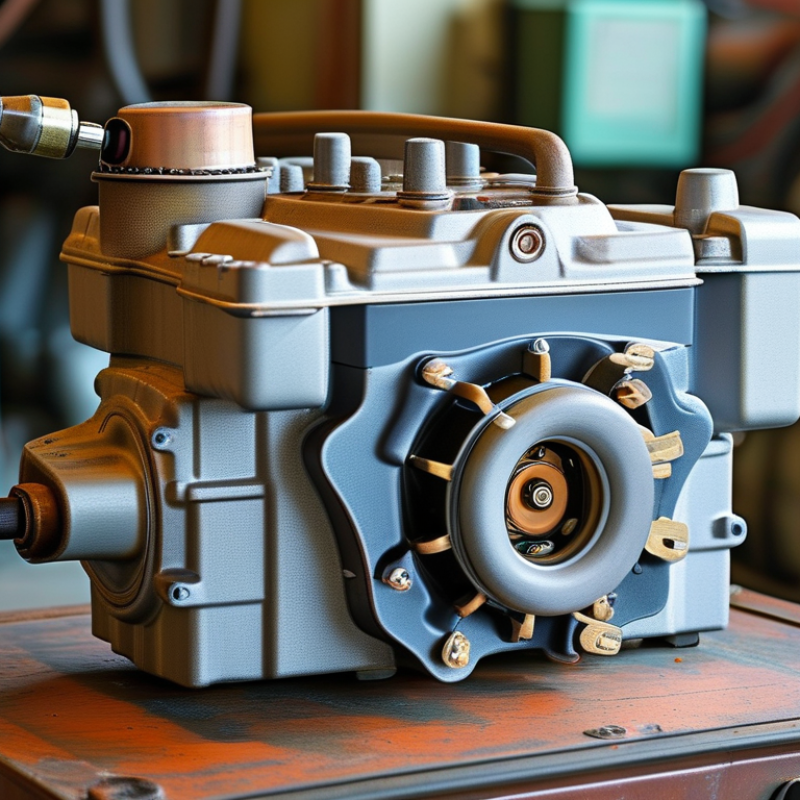
An automobile electric water pump circulates coolant through the engine and thermal system. Unlike a belt-driven pump, it can operate independently of engine speed. This helps control temperatures during idling, startup, turbocharger cooling, and cabin heating. It also supports efficient cooling after the engine stops. The pump is a small part with a major responsibility.
When choosing one, check seven practical details. Confirm the vehicle’s voltage and electrical connector first. Match the required flow rate and pressure, not only the pipe diameter. Review operating temperature, coolant compatibility, and seal construction. A pump that fits physically may still fail under heat. I once focused too much on mounting space and overlooked current draw. That mistake could overload a circuit.
Noise and vibration also matter, especially near the passenger compartment. Ask whether speed control uses a simple signal or a digital communication system. Check protection against dry running, overheating, and blocked circulation. Reliable technical data should include flow curves, pressure limits, and service conditions. During inspection, look for a steady hum, secure wiring, and dry connections. Test the coolant path carefully. A slightly higher flow rate is not always better; excessive circulation can increase power use or disturb temperature control. Verify the pump with the vehicle’s cooling strategy, service records, and diagnostic readings before installation.
Before choosing an automobile electric water pump, verify vehicle compatibility carefully. Check the engine type, model year, electrical voltage, and coolant circuit layout. A pump designed for a similar engine may still deliver the wrong flow rate. Small mismatch, big trouble.
Compare the pump’s inlet and outlet sizes with the existing hoses. Confirm the flow direction, mounting position, and connector shape. The vehicle service manual remains the most reliable reference.
Cooling requirements deserve closer attention. Identify whether the pump serves the engine, turbocharger, battery system, cabin heater, or several circuits. Estimate the required coolant flow under heavy traffic, towing, or hot-weather driving.
Check the pump’s continuous-duty rating, maximum temperature, pressure capability, and control method. Some vehicles require a pulse-width signal, while others use simple switched power. An incorrect control signal can cause weak circulation or premature failure.
Inspect the radiator, thermostat, hoses, reservoir, and electrical wiring before installation. A new pump cannot correct a blocked radiator or trapped air. Use the specified coolant type and bleed the system according to proven service procedures.
Listen for unusual noise after startup and monitor temperature changes during a road test. My own practical lesson is simple: matching dimensions is not enough. I once overlooked a connector detail, and the installation became unnecessarily slow.
Recheck every connection. Reliability comes from careful verification, not guesswork.
7 Tips for Choosing an Automobile Electric Water Pump?
Compare Pump Performance, Flow Rate, and Power Efficiency
Choosing an automobile electric water pump starts with comparing performance under realistic conditions. A pump’s advertised maximum flow can mislead. It may be measured with no hose resistance. Test flow at the required pressure head. Include the radiator, heater core, hoses, and fittings in the circuit. A useful pump keeps coolant moving when the engine bay becomes hot. Check flow at idle, cruising voltage, and maximum electrical load. Do not judge by sound alone. Quiet is not always efficient.
Measure volume with a calibrated container and stopwatch, or use an inline flow meter. Record voltage and current at each test point. Electrical input equals voltage multiplied by current. Compare that figure with delivered flow and pressure. A pump drawing less power may still perform poorly. Look for stable flow, quick temperature recovery, and modest current rise. Thermal cycling matters. Test cold starts and repeated heat-soak cycles. Small details matter. Loose connectors can distort results.
In practical comparisons, keep hose length and coolant mixture consistent. Otherwise, the numbers are not fair. One testing mistake is trusting a single reading. Repeat each measurement after the pump reaches operating temperature. Also inspect the controller’s response to voltage changes. Some pumps become inefficient when restricted. That can surprise you. Choose the unit that meets the required flow with reserve capacity, not the highest free-flow number. Question any result that looks perfect; real vehicles rarely behave perfectly.
Compare pump performance, flow rate, electrical power demand, and hydraulic efficiency before selecting a 12 V automotive electric water pump.
The chart uses representative operating points at a 0.5 bar differential pressure. Hydraulic efficiency is calculated from pressure, flow rate, and electrical input power, so a higher flow rate does not always mean better efficiency.
Choosing an automobile electric water pump starts with materials, not advertised flow rate. Look for corrosion-resistant aluminum or reinforced engineering polymer housings. The impeller should tolerate coolant chemicals, heat, and repeated thermal cycling. IEA’s Global EV Outlook 2024 reported nearly 14 million electric-car sales in 2023, representing about 18% of new-car sales. That growth increases demand for reliable thermal-management components.
Tip 1: Check the coolant path. Avoid narrow passages that may trap debris. Confirm compatibility with the vehicle’s specified coolant. SAE J1645 and ISO 16750 testing principles emphasize vibration, temperature, and electrical-load durability. Ask for evidence of testing, not vague claims. A pump surviving bench testing may still fail after years of road shock. I learned this the hard way.
Tip 2: Inspect installation design. A connector facing upward can collect water near its seal. A poorly placed outlet can also stress the hose. Choose a pump with clear mounting points, correct port orientation, and accessible wiring. Tip 3: Review service details. A replaceable seal or readable flow-direction mark can reduce installation errors. Select continuous-duty performance when the pump supports battery, inverter, or cabin cooling. Short-term efficiency is not enough. Real durability depends on heat, vibration, coolant quality, and maintenance. One overlooked issue remains common: installers often tighten plastic fittings too aggressively. That small mistake can create a crack months later.
| Tip | Evaluation Dimension | What to Check | Practical Selection Guidance | Why It Matters |
|---|---|---|---|---|
| 1. Match the Pump to the Cooling Circuit | Flow rate, pressure, and operating point | Required coolant flow, system pressure loss, voltage, duty cycle, and coolant temperature range | Select a pump whose performance curve covers the vehicle’s required flow at the actual system pressure, rather than choosing by maximum flow alone. | An oversized or undersized pump can cause inefficient power consumption, insufficient cooling, noise, or unstable thermal control. |
| 2. Evaluate Wetted Materials | Chemical compatibility and corrosion resistance | Housing, impeller, shaft, seals, connectors, and compatibility with the specified water-glycol coolant | Prefer materials documented for long-term exposure to automotive coolant, thermal cycling, and the expected operating temperature. Avoid unverified metals or plastics in contact with coolant. | Material incompatibility may lead to swelling, cracking, galvanic corrosion, deposits, seal deterioration, and reduced pump life. |
| 3. Check Durability and Thermal Cycling | Service life, temperature resistance, and mechanical endurance | Rated operating temperature, vibration resistance, bearing design, seal life, start-stop cycles, and validation-test results | Request documented testing for thermal cycling, vibration, humidity, salt exposure where relevant, continuous operation, and repeated start-stop conditions. | Automotive pumps experience frequent temperature changes and vibration, which can accelerate fatigue, leakage, electrical failure, and bearing wear. |
| 4. Verify Electrical and Control Compatibility | Voltage, current, communication, and protection functions | Nominal and transient voltage, maximum current, PWM or network control, reverse-polarity protection, overcurrent protection, and diagnostic feedback | Confirm that the pump interface matches the vehicle controller and that electrical protection is suitable for the vehicle’s power system. | Electrical mismatch can cause overheating, fault codes, electromagnetic interference, poor speed control, or complete pump shutdown. |
| 5. Inspect the Installation Design | Mounting position, hose routing, priming, and service access | Inlet orientation, allowable mounting angles, hose diameter, air-bleed requirements, connector access, and clearance from hot or moving parts | Choose a design that supports secure mounting, short and smooth hose runs, easy bleeding, and sufficient access for inspection or replacement. | Poor installation can introduce air locks, cavitation, excessive hose losses, vibration, leakage, and difficult maintenance. |
| 6. Assess Sealing and Environmental Protection | Leak prevention and resistance to external contamination | Static and dynamic seals, connector sealing, ingress protection, coolant leakage detection, dust, water spray, and road-salt exposure | Use a pump with documented environmental protection appropriate for its mounting location and verify that seals are compatible with the selected coolant. | Coolant leakage can damage nearby electronics, while moisture and contaminants may cause corrosion or intermittent electrical faults. |
| 7. Compare Noise, Efficiency, and Support | Acoustic performance, energy use, documentation, and serviceability | Noise level under representative load, electrical power at the required operating point, installation instructions, spare parts, warranty, and technical support | Compare measured noise and power consumption at the same flow and pressure conditions. Select suppliers that provide curves, drawings, wiring information, and validation data. | Lower energy demand improves system efficiency, while complete documentation reduces installation errors and shortens troubleshooting time. |
When choosing an automobile electric water pump, safety deserves more attention than appearance or price. I inspect the housing, wiring, connectors, and mounting points carefully. A sealed motor housing can reduce moisture damage near the engine bay. Look for overheat protection, reverse-polarity protection, and stable electrical performance. These features help prevent sudden failure during traffic or long-distance driving. That matters.
I also check whether the pump has been tested against recognized electrical and mechanical safety requirements. Clear installation instructions show that the manufacturer understands real workshop conditions. Warning labels should be readable, not hidden in tiny print. I once trusted a pump with poor connector instructions, and installation took much longer than expected. My mistake was focusing only on flow rate. Keep the receipt.
Warranty terms reveal the seller’s confidence and your possible repair costs. Read the coverage period, exclusions, labor policy, and return procedure before buying. A longer warranty is not automatically better if claims require difficult documentation. Reliable support should provide a clear contact method and practical troubleshooting guidance. Save photos of the package and installation. This small habit can protect your claim.
Overall value includes efficiency, durability, installation time, and replacement risk. A cheaper pump may consume less money today but create greater costs after an early failure. Compare rated service life, power demand, included fittings, and maintenance needs. I prefer realistic specifications over impressive promises. Still, product pages can be incomplete, so I would verify critical details with a qualified technician before installation.
: Compare flow at the required pressure head, not only the maximum free-flow rating. Include hoses, fittings, the radiator, and the heater core.
Record flow rate, pressure, voltage, and current. Use a calibrated container and stopwatch, or an inline flow meter.
Multiply voltage by current. Then compare electrical input with delivered coolant flow and pressure.
Not always. Choose stable flow with reserve capacity under real vehicle conditions. A large free-flow number can mislead.
Pump performance may change after heating. Repeat readings at operating temperature and during repeated heat-soak cycles.
Look for overheat protection, reverse-polarity protection, sealed housing, reliable connectors, and stable electrical performance.
Loose connectors can distort test results or cause failure. Inspect the wiring and mounting points carefully before installation.
Check coverage length, exclusions, labor terms, return procedures, and required documents. Keep the receipt and installation photos.
Consider efficiency, service life, installation time, included fittings, maintenance, and replacement risk. The cheapest option may cost more later.
No. Verify critical details with a qualified technician. Real vehicles rarely match perfect laboratory figures.
Choosing the right Automobile Electric Water Pump is essential for maintaining stable engine temperatures and supporting reliable vehicle performance. First, understand the pump’s role in circulating coolant through the engine, radiator, and other cooling components. Then, confirm that the pump matches your vehicle’s model, electrical system, coolant circuit, and available installation space. A suitable pump should provide an appropriate flow rate and pressure without consuming excessive power, helping the cooling system operate efficiently under different driving conditions.
When comparing options, pay attention to construction materials, corrosion resistance, sealing quality, and overall durability. A practical installation design can reduce fitting time and help ensure secure connections. It is also important to review safety features such as overheating protection, dependable electrical insulation, and stable operation. Finally, consider warranty coverage, expected service life, maintenance needs, and total cost rather than focusing only on the purchase price. By evaluating these factors together, you can select an Automobile Electric Water Pump that offers dependable cooling performance, efficient operation, and long-term value.

ANHAN TRADE